.png)
All About Canton Porcelain: Made for Export, Collected Worldwide


For over three centuries, Canton porcelain has travelled across oceans, graced royal dining tables, and become one of the most collected forms of Chinese export art in the world. From 18th-century Europe to modern collectors in Dubai, Canton ware continues to hold timeless appeal.
At Daos Den in Dubai, we often meet collectors who are drawn to its intricate detail, narrative scenes, and vibrant hand-painted enamel work. But what exactly is Canton porcelain — and why is it so globally significant?
Wait...
Canton Porcelain facts? We got that, watch the video :)

What Is Canton Porcelain?
Canton porcelain, also known as Canton ware, is a style of Chinese export porcelain produced primarily during the Qing Dynasty for Western markets.
It takes its name from Guangzhou, historically known as Canton — the only Chinese port open to foreign trade during parts of the 18th and 19th centuries.
While the porcelain itself was typically fired in Jingdezhen (China’s famous porcelain capital), it was decorated in Guangzhou before export.
This two-stage production made Canton ware unique:
High-quality porcelain body from Jingdezhen
Hand-painted enamel decoration applied in Canton workshops


The History of Canton Ware
Canton porcelain rose to prominence during the height of maritime trade between China and Europe.
Following the Canton System (1757–1842), Guangzhou became the primary gateway for Western merchants from:
United Kingdom
France
Portugal
Netherlands

Large quantities of porcelain dinner services, tea sets, and decorative vases were commissioned specifically for European tastes.
These were not random designs — they were tailored for export markets, sometimes even featuring:
European family crests
Custom armorial designs
Western floral patterns
Biblical or mythological scenes
Export Routes to Europe & the Middle East
Canton porcelain travelled aboard trading ships operated by companies such as the British and Dutch East India Companies.
Trade to Europe
Porcelain would leave Guangzhou by sea, passing through:
The South China Sea
Around the Cape of Good Hope
Into ports like London, Lisbon, and Amsterdam
From there, it spread across aristocratic households and royal courts.
Trade to the Middle East
Chinese porcelain had already been admired in the Islamic world for centuries. Canton ware followed older trade routes connecting China to:
Oman
United Arab Emirates
Iran

Today, Dubai has become a modern crossroads once again — making it a fitting home for collectors of historic export porcelain.
Key Characteristics of Canton Porcelain
If you’re looking to identify authentic Canton ware, here are defining features:
1. Dense Decorative Surfaces
Unlike earlier Chinese porcelain, Canton pieces are often richly filled with pattern — minimal white space.

2. Rose Medallion & Rose Canton Styles
The most popular export styles include:
Rose Medallion – panels of figures alternating with birds and florals
Rose Canton – similar but without figural panels
These belong to the famille rose palette, introduced in the Qing era.

3. Narrative Panels
Scenes often depict:
Courtly gatherings
Garden pavilions
Family life
Scholars and attendants

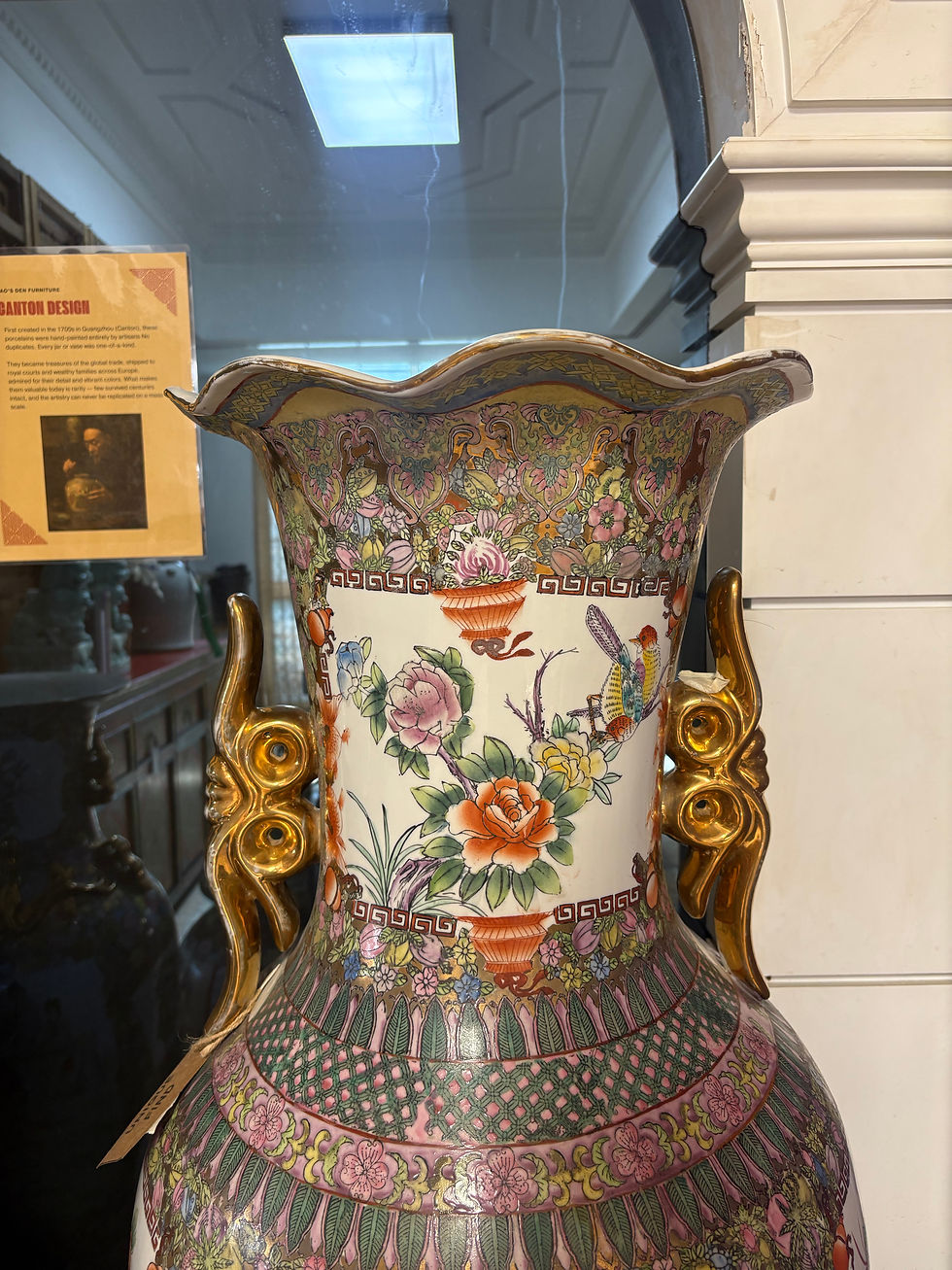
4. Green, Pink & Gold Enamels
Vibrant overglaze enamels define the Canton aesthetic, especially pinks and emerald greens.
5. Shape & Function
Common forms include:
Dinner plates
Serving platters
Teapots
Punch bowls
Baluster vases

Why Canton Porcelain Is Still Collected Today
Canton ware represents:
Global trade history
East-West cultural exchange
Handcrafted artistry
Decorative richness that suits both classical and contemporary interiors
In Dubai’s luxury interiors, Canton porcelain pairs beautifully with carved Chinese furniture, lacquer cabinets, and statement display shelving.

Authenticity Over Replication
At Daosden, every piece — from antique Chinese furniture to porcelain and decorative objects — is selected for its authenticity, craftsmanship, and story. Some of the images used here are taken from our own showroom in Dubai and represent just a portion of our wider antique collection.
We choose to present real pieces, photographed as they are, because living art should feel lived with — textured by age, shaped by hand, and unmistakably individual.
Chinese antique furniture, porcelain, and decorative arts endure because they were never designed to be temporary. They were built to last, to age, and to continue telling stories long after their makers were gone.
That is what makes them living art forms.

Speaking of stories… next week, we’ll explore a piece of furniture created not just for storage, but for blessing. A cabinet traditionally gifted during marriage, rich in symbolism of prosperity, lineage, and harmony — often dressed in auspicious red and adorned with meaningful motifs.
But beyond tradition, these wedding cabinets have found new life in modern homes — functioning beautifully as statement pieces, storage solutions, and quiet storytellers of heritage.
If you’re curious how a centuries-old marriage cabinet still belongs in contemporary interiors, you won’t want to miss this one.
See you on our next blog! – Jeffrey :)
At Daos Den, we don’t just sell furniture.
👉 Visit our Dubai showroom to discover rare finds that carry the soul of China, reimagined for homes that value heritage, artistry, and timeless beauty.
📍 Showroom viewings by appointment
📲 DM us on Instagram @daosdenfurniture


The story of Canton porcelain shows how beautifully crafted objects can travel across cultures and generations, becoming treasured collectibles far beyond their place of origin. In the same way, collectors and gift-givers often look for distinctive pieces that combine craftsmanship, character, and lasting appeal. For those interested in unique decorative collectibles, Camp Hollow offers beautifully designed pieces that can add a memorable touch to a collection or display, making it a relevant resource for anyone who appreciates artistic and collectible objects.